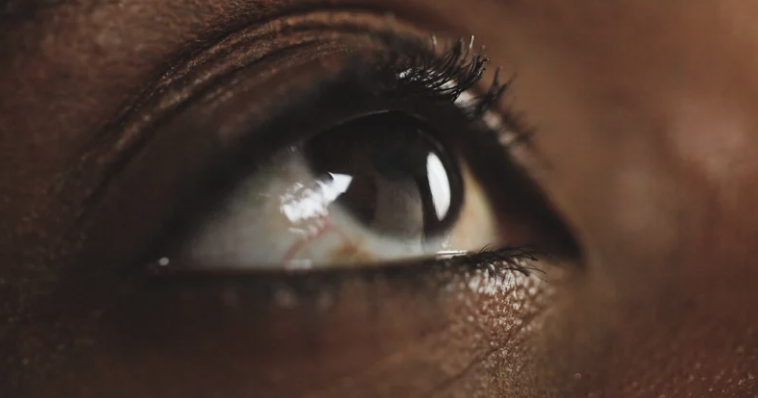
Do your eyes feel gritty at the end of the day? Red, stinging, or quickly fatigued eyes?
During the dry season, your eyes are particularly exposed.
In many regions of sub-Saharan Africa, the air becomes hotter, drier, and filled with dust. While these conditions are common, they can significantly affect daily eye comfort.
Drier air… and more vulnerable eyes
During the dry season, humidity levels drop significantly. The air becomes drier and may carry more dust particles transported by winds coming from the Sahara. These particles can remain suspended in the atmosphere and easily come into contact with the eyes.
The eyes are protected by the tear film—a thin layer of tears that hydrates the eye’s surface and shields it from external aggressions. When the air is very dry, this tear film evaporates more quickly, leading to dryness and discomfort.
Dust: an invisible but constant irritant
Winds, sometimes carrying particles from the Sahara, keep dust suspended in the air.
These particles easily come into contact with the eyes and can cause:
- stinging sensations
- a gritty feeling (like sand in the eyes)
- redness
- eye fatigue
These symptoms can quickly become bothersome in daily life, especially at work or while commuting.
Who is most affected by dry eyes ?
Some people may feel the effects of the dry season on their eyes more intensely:
- people working outdoors or in dusty environments
- drivers and motorcycle taxi riders
- contact lens wearers
- people spending long hours in front of screens
- individuals already prone to sensitive or dry eyes
For these groups, the combination of dry air and dust can worsen symptoms and cause greater discomfort.
How to protect your eyes during the dry season ?
A few simple habits can help maintain eye comfort when the air becomes dry and dusty:
- avoid rubbing your eyes, as this can increase irritation
- wear sunglasses or protective eyewear in very dusty environments
- take regular breaks from screens to reduce eye strain
- maintain proper eye hydration
Using hydrating eye solutions, such as Carbosol, can also help lubricate the eye surface and soothe dryness or irritation caused by dry air and dust.
Adopting these simple habits helps preserve eye comfort, even in more aggressive environmental conditions.
Preserving daily eye comfort
The dry season and dust can put significant strain on the eyes, leading to dryness, stinging, or irritation. However, by adopting simple daily habits and using appropriate solutions to hydrate and protect the eye surface, it is possible to limit these discomforts.
✔️ avoid rubbing your eyes
✔️ wear protective glasses in dusty environments
✔️ take regular screen breaks
✔️ maintain proper eye hydration
The right reflex: hydrate and protect
In this context, using a hydrating solution becomes essential.
Carbosol®, thanks to its carboxymethylcellulose:
✔️ provides long-lasting hydration to the eye surface
✔️ soothes irritation caused by dust
✔️ helps restore the tear film
It acts as a true shield against the effects of dry air and dust.
Protect your visual comfort every day
The dry season should not become a source of constant discomfort.
By adopting simple habits and using appropriate solutions, it is possible to effectively protect your eyes—even in harsh environments.
Don’t wait for discomfort to set in.
Adopt the Carbosol® reflex now for hydrated, soothed, and protected eyes every day.
FAQ
Why can the dry season cause dry eyes?
During the dry season, the air is hotter and less humid, which accelerates the evaporation of the tear film that protects the eyes. Dust carried by winds from the Sahara can also irritate the eye surface and worsen dryness.
How can you recognize eye irritation caused by dust?
It may appear as stinging, redness, a gritty sensation in the eye, or visual fatigue—especially when the eyes are exposed to dry or dusty air.
What can you do to relieve dry eyes during the dry season?
It is recommended to protect your eyes from dust, avoid rubbing them, and keep the eye surface well hydrated. Hydrating solutions like Carbosol can help lubricate the eyes and improve comfort.